Tips & Advice
You’re probably overpaying for furniture freight transport and you don’t even realise it.
Most homeowners and retailers expect pricing to follow a simple formula. Distance equals cost. A bigger job equals a higher price. It feels predictable. In reality, freight pricing is shaped by a combination of operational decisions happening behind the scenes.
Each quote reflects how efficiently your job fits into a carrier’s network at that specific moment. Change one variable timing, location, load type and the price shifts. Understanding those variables gives you leverage. Without that understanding, you’re relying on guesswork.
This guide breaks down the eight factors that influence furniture freight transport pricing so you can compare quotes properly, reduce unnecessary costs, and make decisions with clarity.
The Real Cost Drivers Behind Furniture Freight Transport (And Why Most People Get It Wrong)
What actually goes into a freight quote beyond just distance
A freight quote is not a fixed rate tied to kilometres travelled. It’s a calculation of effort, efficiency, and risk. Carriers look at how your job fits within their existing operations, not just how far it needs to go.
If your furniture can be moved as part of an already scheduled run, the cost is typically lower. If it requires a dedicated trip or disrupts a route, the price increases. This is where many people misjudge value. Two jobs that appear similar on paper can have completely different cost structures depending on how they align with available transport.
This matters because freight is built around optimisation. Carriers aim to maximise every kilometre, every load, and every hour on the road. A job that complements that system is cost-efficient. One that sits outside it becomes expensive.
A practical example is a retailer sending regular palletised furniture between major cities. That job integrates easily into freight networks. Compare that to a one-off residential move involving bulky items in a low-demand area the second job introduces inefficiencies that must be priced in.
Distance, Location & Route Efficiency: The Silent Price Multipliers
Why “where” matters just as much as “how far”
Distance is visible. Route efficiency is not but it has just as much impact on pricing.
Major freight corridors operate differently from low-demand routes. Between capital cities and high-volume regions, there is constant movement. Carriers already run those lanes, which creates competition and stabilises pricing. Jobs that fall within these routes benefit from that existing activity.
The scale of road freight in Australia shows why route efficiency matters. The Bureau of Infrastructure and Transport Research Economics reported that around 249 billion tonne kilometres of freight moved by road in Australia during 2023–24. For furniture freight transport, this reinforces why pricing is affected by carrier networks, route density, available space, and whether your job can be added efficiently to an existing run.
Once a job moves outside those lanes, the dynamics change. Regional, remote, or less accessible locations often mean fewer carriers, longer planning time, and potential empty travel. These factors introduce costs that aren’t obvious at first glance.
For example, transporting furniture from Brisbane to Melbourne may attract multiple competitive quotes due to route density. Moving furniture from a regional town to a remote destination may involve fewer options and higher pricing, even if the distance is shorter.
This is why comparing quotes is essential. It reveals how your route sits within the broader freight network and whether you’re paying for distance alone or for inefficiency as well.
Size, Weight & Load Complexity: The More Awkward, The More Expensive
How your furniture’s shape and handling requirements affect pricing
Furniture freight transport is rarely straightforward because furniture is rarely uniform. Carriers assess not just what you’re moving, but how it behaves in a transport environment.
Items that are easy to stack, secure, and handle allow carriers to maximise space. Items that are bulky, fragile, or irregular disrupt that process. When a load reduces usable truck space or requires additional care, it directly impacts pricing.
Weight also plays a role, particularly in relation to vehicle limits and fuel consumption. Heavier loads can restrict what else is carried alongside them, while awkward shapes can prevent efficient packing altogether.
Consider the difference between boxed furniture and a large sectional sofa. The boxed items can be stacked and integrated with other freight. The sofa may need to be transported in a way that limits surrounding capacity and requires more careful handling.
A common mistake is underestimating or simplifying load details when requesting quotes. Inaccurate information leads to pricing adjustments later. Providing clear dimensions, weight estimates, and handling requirements upfront results in more accurate and competitive quotes from the start.
Timing & Urgency: The Faster You Need It, The More You’ll Pay
Why flexible delivery dates can save you hundreds
Timing directly affects how efficiently a carrier can plan your job. Urgent freight introduces constraints. Flexible freight creates opportunity.
When a job requires strict pickup times or rapid delivery, it often forces carriers to prioritise that job over others or adjust their existing routes. That disruption carries a cost. The tighter the timeframe, the less room there is for optimisation.
Flexible jobs, on the other hand, allow carriers to integrate your load into existing schedules. This is where backloading becomes relevant. Instead of returning empty, a carrier fills unused capacity with your shipment, reducing wasted kilometres and lowering overall cost.
For example, a homeowner moving furniture with a fixed weekend deadline may receive higher quotes than someone willing to accept a delivery window across several days. The second scenario gives carriers room to plan efficiently.
From a cost perspective, flexibility is one of the simplest ways to reduce pricing without changing anything else about the job.
Carrier Availability & Market Demand: Why Prices Fluctuate Daily
The supply-and-demand effect most people overlook
Furniture freight transport operates in a live environment where availability changes constantly. Pricing reflects current conditions, not static rates.
During high-demand periods such as relocation seasons or peak retail cycles more jobs compete for available carriers. This shifts pricing upward. In quieter periods, carriers compete for fewer jobs, which can drive pricing down.
Geography also plays a role. Busy routes with frequent movement tend to have more available capacity. Less active areas may experience fluctuations based on limited carrier presence.
For example, a retailer shipping consistent volumes may notice different pricing for identical jobs depending on timing. A homeowner booking during a peak moving period may encounter higher quotes simply due to demand pressure.
Relying on a single quote in this environment provides limited perspective. Comparing multiple quotes at the same time gives a clearer picture of current market conditions and helps identify competitive pricing.
Loading, Access & Labour Requirements: Hidden Costs That Add Up Fast
Why your pickup and delivery locations matter more than you think
Access conditions are often overlooked until they affect pricing. Carriers assess not only what needs to be moved, but how easily it can be collected and delivered.
Locations with restricted access, narrow streets, limited parking, height restrictions can complicate the job. Similarly, properties with stairs, long carry distances, or no lift access increase labour requirements.
These conditions extend the time required to complete the job and may require additional personnel or equipment. That added effort is reflected in the quote.
A straightforward warehouse delivery with direct access is quick and efficient. A residential delivery involving multiple flights of stairs and limited parking is not. The difference in effort between those two scenarios is significant.
Providing accurate access details upfront allows carriers to assess the job properly. It also reduces the likelihood of unexpected charges after the job has begun.
Insurance, Risk & Special Handling: Protecting What Matters
When extra protection increases your price (and why it’s worth it)
Risk is built into every freight job, but it varies depending on what is being transported. High-value or fragile furniture requires additional precautions that influence pricing.
Carriers may include protective measures such as specialised packaging, careful load securing, and higher insurance coverage. These measures reduce the likelihood of damage but increase the overall cost of transport.
This is not simply an added expense, it’s a form of risk management. The cost of replacing or repairing damaged furniture often exceeds the cost of transporting it properly in the first place.
For instance, transporting standard retail furniture carries a different risk profile compared to moving antique or custom-built pieces. The level of care required is reflected in both process and pricing.
Choosing transport based solely on price without considering risk can lead to greater costs later. Balancing protection with cost is essential for long-term value.
Platform, Booking Method & Fees: The Difference Between Paying More… or Less
Why how you book matters just as much as what you book
The booking method influences how pricing is structured and presented. Traditional freight arrangements often involve intermediaries who manage communication and coordination. This can reduce transparency and introduce additional cost layers.
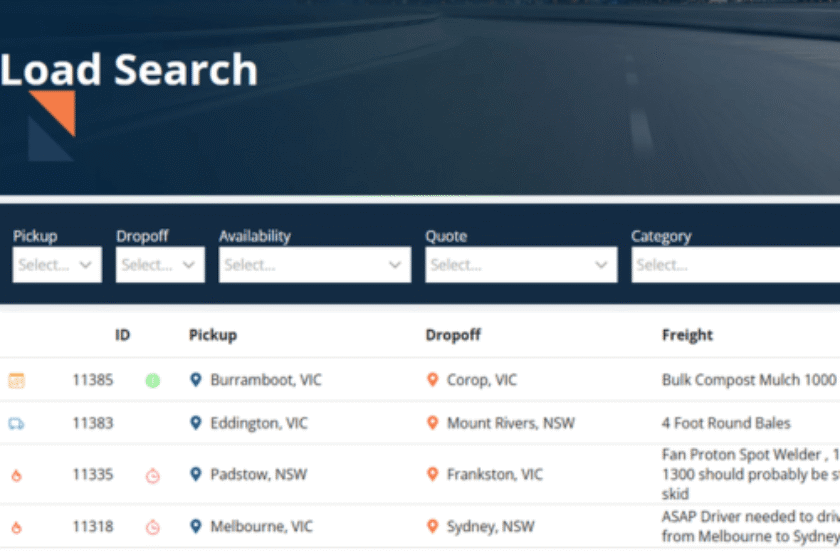
Freight marketplaces change that structure by connecting shippers directly with carriers. Multiple carriers can view and quote on the same job, creating a competitive environment.
This competition benefits the shipper. It provides visibility into pricing, allows comparison across different providers, and increases the likelihood of securing a cost-effective option.
For homeowners and retailers, this approach offers more control. Instead of relying on a single quote, you can evaluate multiple options based on price, timing, and suitability.
What This Means For You (And How To Pay Less For Furniture Freight Transport)
Furniture freight transport pricing follows a structure, even if it doesn’t appear obvious at first. Each factor distance, timing, load type, access contributes to the final cost.
Understanding these variables allows you to make adjustments that improve efficiency and reduce pricing. Small changes, such as flexible delivery windows or accurate load descriptions, can have a measurable impact.
The goal is not to find the cheapest option without context. It’s to understand what you’re paying for and identify where efficiencies can be gained.
What People Often Ask Before Booking Furniture Freight Transport
How can I get the cheapest furniture freight transport quote?
Compare multiple quotes and provide detailed, accurate information about your load. Clear details allow carriers to price efficiently and competitively.
Is furniture freight transport cheaper with backloading?
Yes. Backloading allows carriers to utilise unused capacity, which often results in lower pricing for flexible shipments.
Do I need insurance for furniture transport?
For high-value or fragile items, insurance is recommended to protect against potential loss or damage.
Why do quotes vary so much between providers?
Each carrier operates with different routes, schedules, and costs. A carrier already travelling your route may offer a lower price than one needing to adjust their operations.
Can I transport furniture anywhere in Australia?
Yes. Nationwide freight platforms connect you with carriers operating across metropolitan and regional areas.
Stop Guessing Your Freight Costs Start Controlling Them
Every freight decision affects cost, whether it is recognised or not.
LoadLink Connect connects you with a nationwide network of verified carriers, giving you visibility, control, and the ability to compare pricing in real time.
If you want a clearer way to manage furniture freight transport costs, contact us today and compare suitable carrier options for your next delivery.