Tips & Advice
Every functioning supply chain whether domestic or international relies on systems that can move goods efficiently, predictably, and at scale. Container transport services sit at the centre of that system. They provide a standardised way to move freight across multiple transport modes without disruption.
The key advantage lies in uniformity. Containers are designed to transition seamlessly between ships, trucks, and rail networks without repacking. This eliminates repeated handling, which has historically been one of the largest sources of delay, damage, and cost in freight operations. For supply chain managers, this creates a level of operational consistency that is difficult to achieve through fragmented transport methods.
In practice, this means a shipment leaving a port in Melbourne can move through to a regional destination in Queensland with minimal intervention. The structure is already in place the container becomes the constant, while the transport method changes around it. Businesses that understand this don’t just move freight; they design systems around it.
The Hidden Engine Behind Global Trade (And Why Smart Businesses Rely on It)
Container transport services have reshaped how freight is managed, not just by improving speed, but by simplifying complexity. Before containerisation, freight movement required coordination across multiple handlers, each introducing potential delays or inconsistencies. Today, a single container carries goods from origin to destination with far fewer touchpoints.
This reduction in handling has a direct impact on both cost and risk. Fewer touchpoints mean fewer opportunities for damage, loss, or miscommunication. It also reduces labour requirements, which contributes to lower overall freight costs over time. For businesses moving high volumes, these incremental efficiencies compound quickly.
Consider a supply chain manager coordinating weekly shipments across interstate routes. Without containerisation, each transfer point introduces variability timing, handling quality, and coordination challenges. With container transport services, those variables are significantly reduced. The process becomes repeatable, which allows for better forecasting, tighter delivery windows, and more reliable customer outcomes.
Why Containerised Freight Delivers Speed, Security, and Serious Cost Advantages
The operational benefits of container transport services are often discussed in isolation speed, security, cost but their real value comes from how they work together within a single system.
Speed is achieved through standardisation. Containers are designed for rapid loading and unloading, which reduces dwell times at ports and depots. There is no need to reconfigure cargo for different transport modes, which removes delays that typically occur during transitions. For time-sensitive freight, this consistency can be the difference between meeting or missing delivery deadlines.
The scale of container movement in Australia shows why this efficiency matters. According to the Bureau of Infrastructure and Transport Research Economics, 9.1 million TEUs were exchanged at container terminals in Australia across Brisbane, Sydney, Melbourne, Fremantle and Adelaide in 2024–25. This volume highlights how heavily Australian supply chains rely on containerised freight moving smoothly through ports, depots, road networks and rail connections.
Security is built into the structure. Containers are sealed units, which limits exposure during transit. This is particularly relevant for high-value or sensitive goods where multiple handling points increase risk. A sealed container maintains integrity from pickup through to delivery, providing both physical protection and traceability.
Cost efficiency follows naturally. Reduced handling lowers labour costs, while faster turnaround times improve asset utilisation. Carriers can move more freight in less time, and businesses benefit from competitive pricing driven by efficiency rather than negotiation alone.
However, these benefits are often diluted by outdated processes. Many businesses still rely on manual coordination calls, emails, and fragmented systems to manage container transport. This introduces delays that undermine the very efficiencies containerisation is designed to create.
Digital platforms address this gap by aligning the operational advantages of container transport services with a more efficient booking and management process. LoadLink Australia, for example, connects shippers directly with verified carriers, removing unnecessary layers and enabling faster decision-making.
Container Transport vs Traditional Freight: What Most Businesses Get Wrong
Traditional freight methods often persist not because they are effective, but because they are familiar. Many businesses continue to rely on processes that were built around limitations that no longer exist.
One of the most common issues is reliance on intermediaries. While brokers can provide access to carriers, they also introduce additional costs and communication layers. This can slow down decision-making and reduce transparency around pricing and availability.
Another challenge is limited visibility. Without a centralised system, tracking shipments becomes fragmented. Updates are reactive rather than proactive, which makes it difficult to manage delays or adjust plans in real time. For supply chain managers, this lack of visibility creates uncertainty that can affect downstream operations.
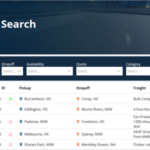
Container transport services, when integrated into a modern platform, address these issues directly. Instead of coordinating through multiple parties, businesses can access a network of carriers in one place. Quotes are provided transparently, and shipment progress can be monitored through a single interface.
For example, a company transporting machinery interstate may traditionally rely on a broker to source a carrier, negotiate pricing, and coordinate delivery. With a digital freight marketplace, that same company can list the load, receive multiple quotes, and select a carrier based on price, availability, and capability all within a shorter timeframe.
The difference is not just efficiency. It is control.
How to Unlock Reliable, Nationwide Container Transport Without the Usual Headaches
Accessing container transport services is not the challenge managing them effectively is. The difference between a functional system and an optimised one often lies in how information flows between shippers and carriers.
A digital freight marketplace simplifies this by centralising the process. Instead of managing multiple communication channels, supply chain managers can operate from a single platform. Load details are submitted once, matched with relevant carriers, and managed through to delivery.
This approach also improves carrier selection. Verified carriers provide documented credentials, including insurance and compliance standards, which reduces the risk associated with unknown providers. The result is a more reliable network, supported by transparency rather than assumption.
In practical terms, this means a business needing to move containers across Australia can:
- List a shipment with specific requirements
- Receive responses from carriers equipped to handle that load
- Compare options based on cost, timing, and capability
- Monitor the shipment from dispatch to delivery
LoadLink Australia is structured around this model, offering nationwide coverage and direct communication between shippers and carriers. The platform’s design reflects real operational challenges within the Australian transport industry, rather than theoretical workflows.
What Supply Chain Managers Often Ask Before Switching
“Are container transport services suitable for all freight types?”
Containerisation supports a wide range of freight, from general goods to specialised cargo such as machinery, vehicles, and bulk materials. The flexibility comes from the variety of container types and the carrier network available.
“How do I ensure carriers are reliable?”
Carrier verification processes check for insurance, licensing, and operational capability before allowing participation on the platform. This creates a baseline level of trust across the network.
“Will this actually reduce my costs?”
Cost reductions are typically achieved through improved efficiency rather than lower rates alone. Competitive quoting, reduced handling, and faster turnaround times contribute to overall savings.
“Is it difficult to transition from traditional systems?”
Most digital freight platforms are designed to simplify onboarding. The shift involves consolidating existing processes into a more structured system rather than introducing additional complexity.
Take Control of Your Container Transport Strategy
Container transport services already form the foundation of global trade. The opportunity lies in how effectively they are used within your own operations.
Businesses that move beyond manual processes and fragmented systems gain more than efficiency; they gain visibility, control, and the ability to adapt quickly when conditions change.
LoadLink Connect provides a direct path to that outcome. With a national network of verified carriers and a platform designed for practical use, it enables supply chain managers to manage container transport services with greater confidence and clarity. To improve how your business manages freight, contact us today and speak with the LoadLink team.