Tips & Advice
Every kilometre you drive empty is money lost. Fuel costs don’t stop. Maintenance doesn’t pause. Time keeps moving whether you’re loaded or not. For local truck drivers, those gaps between jobs aren’t just inconvenient they quietly erode margins and make it harder to build consistent income.
That’s where regional load boards come into play. Instead of relying on phone calls, outdated contacts, or waiting for work to come through, regional load boards give you visibility. You can see what freight is moving in your area, when it needs to move, and who needs it moved. Used properly, they shift you from reacting to work… to planning it.
Stop Driving Empty How Regional Load Boards Keep Your Wheels (and Income) Moving
Regional load boards are built to solve one of the oldest problems in transport: empty kilometres.
At their core, they are digital platforms that list available freight within specific regions. Shippers post loads, and drivers or transport operators can review, quote, and secure those jobs directly. Instead of relying on a limited network or waiting for repeat clients, you’re tapping into a broader, more active marketplace.
The real advantage is efficiency. Not just finding work but finding work that fits.
For example, if you’ve just completed a delivery and you’re heading back toward your base, a regional load board allows you to search for backloads along that exact route. Instead of returning empty, you can pick up a paying job that offsets your fuel and time. Over a week, that difference compounds. Over months, it changes your entire profitability.
This matters because transport isn’t just about distance it’s about utilisation. A truck that’s moving freight consistently will always outperform one that’s only loaded half the time, even if both are working the same hours.
The need for better utilisation is becoming more urgent as Australia’s freight task is growing rapidly. The Australian Government reported that around 756 billion tonne-kilometres were transported across Australia in 2020, with that figure forecast to reach around 964 billion tonne-kilometres by 2050. For local truck drivers, this growth creates more opportunity, but it also makes route planning, backloads, and load matching more important for protecting margins.
Find Better Loads Faster How to Use Regional Load Boards Like a Pro
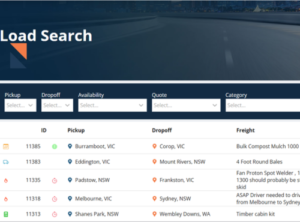
Access to loads is one thing. Using that access effectively is something else entirely.
Drivers who get consistent results from regional load boards approach them with a system. It starts with how you present yourself. A complete profile clear equipment details, service areas, and availability makes it easier for the platform and shippers to match you with suitable jobs.
From there, filtering becomes critical.
Instead of scrolling through every available listing, focus on loads that align with your current position and planned route. For instance, if you’re operating within a 200 km radius, narrow your search to that region and prioritise jobs that either extend your route profitably or fit neatly into your return trip. This reduces wasted time and helps you act faster when the right opportunity appears.
Speed matters more than most drivers realise. The best loads those that pay well and align perfectly don’t stay available for long. Submitting a quote early, and following up when necessary, often makes the difference between securing the job and missing it.
There’s also a strategic layer. Instead of thinking in single jobs, experienced operators look at sequences. A short local delivery in the morning might position you for a longer haul in the afternoon, followed by a backload that brings you home. Regional load boards give you the visibility to connect those dots.
Avoid the Common Mistakes That Cost Truckers Time and Money
Not all load boards deliver the same results and assuming they do is where many drivers lose time and money.
Older or poorly maintained platforms often contain outdated listings, limited job volume, or slow communication channels. You might spend time quoting on loads that are already taken or waiting on responses that never come. That delay isn’t just frustrating it reduces the number of real opportunities you can act on.
Another common mistake is chasing every available load.
It’s easy to fall into the habit of quoting on anything that appears, especially during quieter periods. But not every job is worth taking. Low-paying freight, poor routing, or mismatched load types can leave you worse off once fuel, time, and wear are factored in.
A better approach is selective consistency.
Modern freight marketplaces improve this by offering real-time listings, verified participants, and more direct communication between shippers and carriers. That reduces uncertainty and allows you to make faster, more informed decisions.
For example, instead of waiting for a broker to confirm details, you can often communicate directly with the shipper, clarify requirements, and lock in the job without unnecessary delays. That level of control helps you protect your margins and avoid wasted effort.
Turn Local Loads Into Long-Term Income Streams
Regional load boards are often seen as a short-term solution something to fill gaps between jobs.
In reality, they can be used to build long-term consistency.
When you regularly operate within specific regions, patterns start to emerge. Certain routes have higher demand. Certain industries move freight at predictable times. Over time, you begin to recognise which jobs are worth prioritising and which ones to avoid.
For example, a driver working consistent regional routes might notice regular demand for machinery transport between two towns or recurring palletised freight along a specific corridor. By focusing on those patterns, you reduce uncertainty and increase the likelihood of securing repeat work.
This is where the right platform makes a difference.
A well-structured marketplace doesn’t just show you available loads it helps you position yourself within your region. As you build a history of completed jobs, communicate directly with shippers, and respond quickly to opportunities, you become easier to trust and more likely to be selected again.
Over time, that shifts your business from reactive to predictable.
Instead of relying on sporadic work, you’re building a steady flow of jobs within your preferred area. That stability makes planning easier, reduces downtime, and creates a more reliable income stream.
If you’re ready to move from inconsistent work to structured opportunities, the next step is simple.
What Local Drivers Want to Know Before Getting Started
How quickly can I find loads using regional load boards?
Most drivers can start viewing available loads immediately after setting up their account. The speed at which you secure work depends on how well your profile matches current demand and how quickly you respond to opportunities.
Do I need to pay to access loads?
Many platforms operate on a subscription model for carriers, while allowing shippers to post loads at no cost. The key consideration is whether the platform provides enough relevant opportunities to justify that investment.
Are the loads verified?
Stronger platforms include verification processes for carriers and shippers, checking documentation such as insurance and business credentials. This helps reduce risk and improves reliability across the network.
Can I use regional load boards just for backloads?
Yes. In fact, many drivers use them primarily to reduce empty return trips. By targeting backloads, you can improve overall trip profitability without changing your core routes.
What types of freight can I find?
Regional load boards typically include a wide range of freight from general goods and palletised loads to machinery, bulk materials, and specialised transport. The availability depends on your region and the equipment you operate.
Ready to Stop Driving Empty?
There’s a difference between staying busy and staying profitable.
Regional load boards give you the visibility and control to make better decisions about where you go, what you carry, and how often your truck is earning. Over time, those decisions add up to fewer empty kilometres and more consistent income.
LoadLink Connect combines industry experience with a national freight marketplace designed to connect drivers with real opportunities without unnecessary delays or intermediaries.
If you’re ready to take control of your workload and start securing better freight in your area, now is the time to act. Contact us today to learn how LoadLink Connect can help you find suitable freight opportunities and reduce empty kilometres.