Digital Freight PlatformsFreight Cost ComparisonFreight MarketplacesFreight SolutionsFreight TechnologyTips & Advice

Small businesses across Australia have leaned on Sendle for simple, affordable shipping. But as orders grow, loads get heavier, and customers spread further across the country, “one size fits all” courier solutions start to crack. This guide walks you through the best Sendle alternatives for small business Australia and shows you how to switch without risking delays, angry customers, or blown out freight bills.
Best Sendle Alternatives for Small Business Australia
If you run a small business in Australia, there’s a good chance you’ve typed your card details into Sendle more than once. It’s easy. It works. Until one day it does not.
Prices creep up. Parcels get bigger. Maybe you start sending pallets, machinery, or stock between warehouses. Suddenly the simple courier that got you started feels like a tight shirt after Christmas.
Do you keep forcing everything through the same Sendle account? Or do you look at alternatives that can actually grow with you?
In this guide, we’ll unpack the best Sendle alternatives for small businesses in Australia, explain where courier style services make sense (and where they do not), and show you how a freight marketplace like Loadlink can give you more control, more options, and more breathing room.
The Moment You Outgrow Sendle: What Small Businesses Really Need Next
Why “Good Enough” Shipping Starts Costing You Money
In the early days, Sendle can feel perfect. You’ve got a few orders a week, most of them small parcels, and you just want a label you can print and go.
But as soon as your volumes rise or your average order size changes, “good enough” shipping quietly starts draining your profit:
- You send multiple boxes to the same customer because weight limits are tight
- You push bulky items through parcel services that were never designed for them
- You organise workarounds instead of using the right tool for the job
That costs time, money, and energy. It rarely shows up on the Sendle invoice, but it absolutely shows up in your margin.
The Hidden Friction of Relying on a Single Courier Service
Relying on one courier platform for everything exposes your business to:
- Service delays or disruptions
- Price changes you did not plan for
- Coverage gaps in regional or remote areas
- Limitations on freight types (pallets, machinery, oversize, fragile)
Small businesses that move beyond the “single courier” mindset usually do not stop using Sendle completely. They add alternatives for heavier, time sensitive, or more complex freight. That is where marketplaces, specialised carriers, and platforms like Loadlink come into play.
The Best Sendle Alternatives for Small Business in Australia (Side by Side)
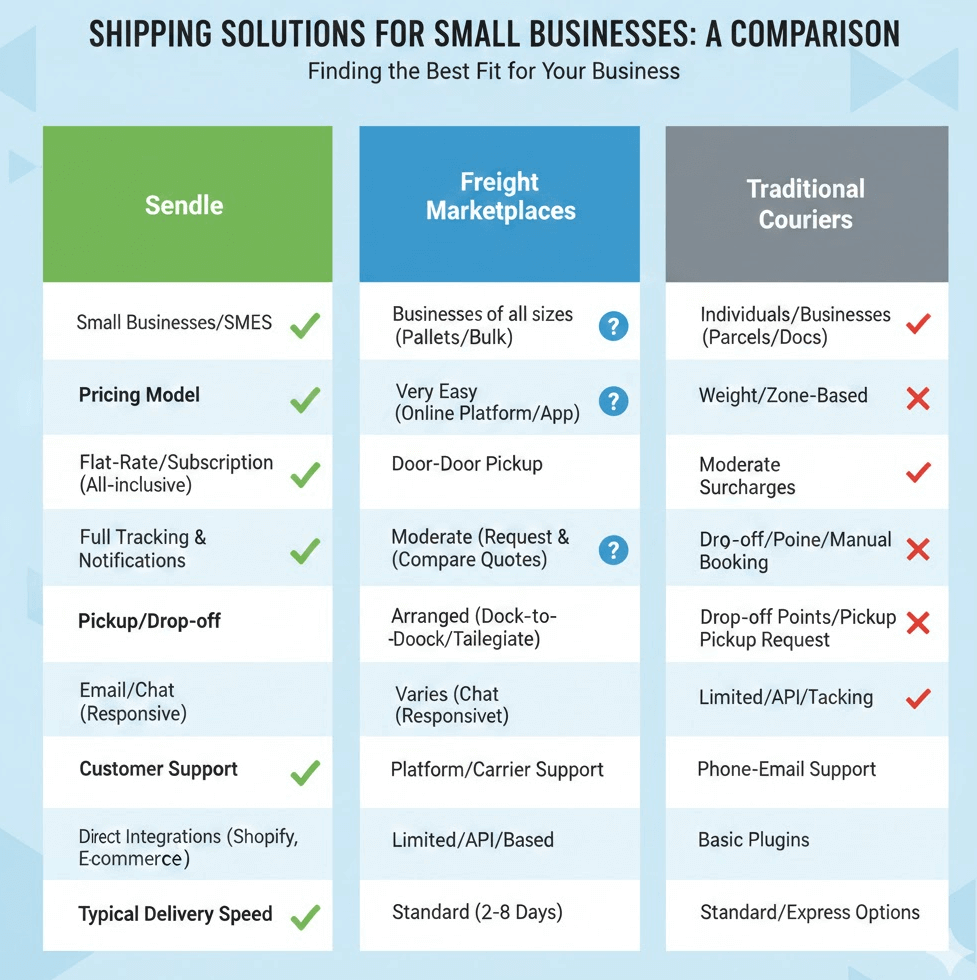
There are three common paths small businesses take when Sendle starts feeling tight: traditional couriers, Sendle style label platforms, and freight marketplaces.
| Option | Best for | Where it can fall short |
|---|---|---|
| Traditional couriers and national carriers | Standard parcels, common lanes, businesses that want one provider | More admin, account steps, and friction for non standard freight |
| Sendle style label platforms | Ecommerce parcels, rate comparison, label workflows | Still parcel first. Pallets and bulky freight can be awkward or expensive |
| Freight marketplaces (like Loadlink) | Pallets, bulky loads, machinery, warehouse transfers, regional runs | Needs a bit more freight detail (because it handles real freight) |
Sendle vs Traditional Couriers: When Speed Meets Red Tape
Traditional couriers and national carriers are usually the first place Sendle users look. Australia Post business services, regional carriers, and well known courier brands can offer established networks and decent coverage for metro and many regional areas.
But they can also introduce complexity: account applications, minimum volumes, negotiated rates that only make sense at scale, and manual quote requests for anything that is not a neat little box.
Sendle vs “Platforms Like Sendle”: Apps That Feel Familiar
Other Sendle style tools can work well for simple ecommerce parcels. They feel familiar because you are still in a label workflow.
The catch is most are still built around parcel freight. Once you move into pallets, heavy items, oversized goods, or freight between warehouses, you are back to bending a parcel solution into a freight job.
Sendle vs Loadlink: A Freight Marketplace Built for Growing Businesses
This is where a marketplace style platform like Loadlink becomes a genuine Sendle alternative for small business freight. Instead of pushing everything through one courier, you list your load once, carriers quote, and you choose the option that fits your timing, budget, and freight type.
Key differences compared to a standard courier setup:
- Built for more than parcels: pallets, machinery, vehicles, portable buildings, bulk loads, and more
- Direct carrier quotes so you can see real market pricing
- Nationwide coverage across metro, regional, and remote routes
- Flexible as you grow, from your first pallet to your hundredth
If you want a deeper comparison, see: Sendle vs Loadlink: freight comparison for Australian businesses.
How to Choose the Right Sendle Alternative for Your Business
Pricing, Coverage, Freight Type: The Non Negotiables
Before you jump from Sendle to anything else, get clear on what matters most for your operation:
- Pricing model: flat parcel rates vs quoted freight
- Coverage: metro only vs regional and remote customers
- Freight type: parcels vs pallets, machines, vehicles, stock transfers
- Support: how quickly you can speak to a real person when something goes wrong
- Visibility: whether you can manage shipments without spreadsheets and inbox chaos
7 Questions to Ask Before You Move On From Sendle
- Can it handle my current shipping, plus what I want to be shipping 12 months from now?
- How easy is it to quote something that is not a standard parcel?
- What happens if my customer is in regional or remote Australia?
- How quickly can I reach a human if something goes sideways?
- Does it help me compare options, or lock me into one carrier?
- Can I track and manage shipments in one place?
- Will it reduce admin, or just swap one headache for another?
A Simple Plan to Switch from Sendle Without Disrupting Your Operations
Map Your Current Sendle Usage (So You Do Not Miss Anything)
Before you change anything, take a quick snapshot of how you use Sendle today:
- Average parcel size and weight
- Shipments per week
- Time sensitive orders
- Regional or remote customers
- Orders you cannot send via Sendle right now (too big, too heavy, too awkward)
Step by Step: Trying Loadlink on Your Next Freight Job
- Pick one suitable load: a pallet, heavier shipment, or a regional delivery that is awkward via Sendle
- Create a Loadlink account and set up your shipper profile
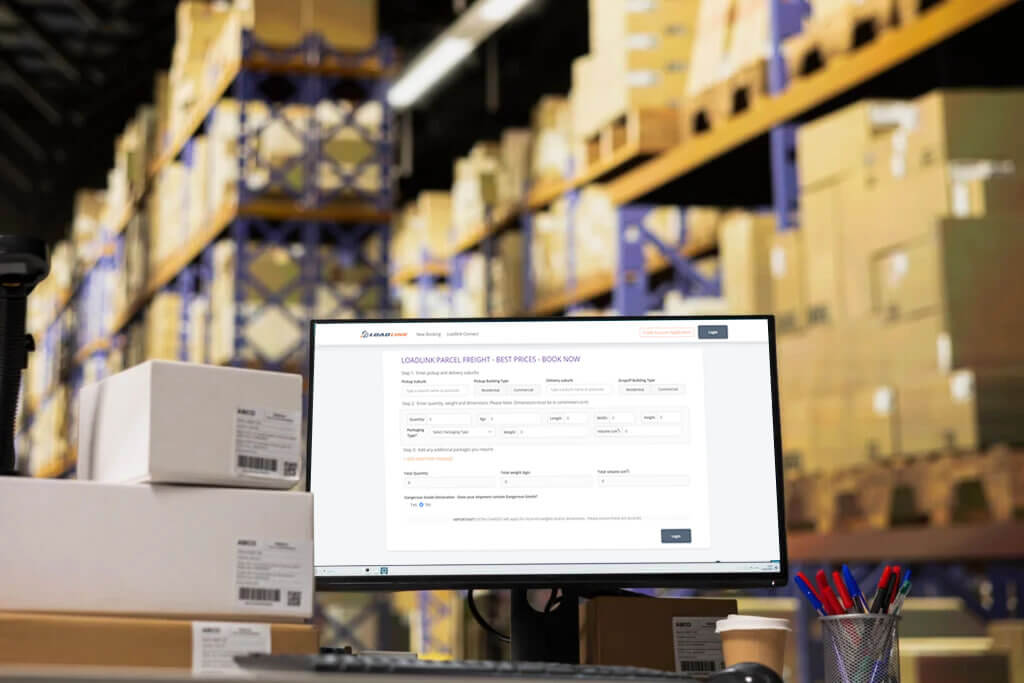
- Post the load with clear details: pickup, drop off, dimensions, weight, timing, and special requirements
- Review quotes from carriers and choose the best fit
- Run both in parallel for a month: Sendle for simple parcels, Loadlink for the freight that makes Sendle sweat
- Review cost, reliability, time saved, and customer feedback
When you are ready to take the next step or want to confirm if a shipment is a good fit, contact our team or call 07 5518 8894.
FAQs
Do I have to stop using Sendle if I start using Loadlink?
No. Many small businesses keep Sendle for small, simple parcels and add Loadlink for heavier, bulkier, or more complex freight.
Is a freight marketplace more expensive than Sendle?
Not necessarily. Carriers compete for your load and can fill otherwise empty capacity, which often creates competitive pricing for pallets, machinery, and larger freight.
I’m just a small business. Is Loadlink only for big fleets?
No. Marketplaces like Loadlink are built for everyone from solo operators to growing SMEs. If you need to move a pallet, a machine, a trailer, a vehicle, or a bulky shipment, the platform can help even if volumes are modest.
How hard is it to post a load compared to booking a Sendle label?
It is different, not harder. You add freight detail and timing, then carriers come back with quotes. After one or two jobs, it becomes a straightforward workflow.
What about reliability and trust?
With a marketplace, you can see carrier details and choose who to work with. Over time, you build a shortlist of carriers you trust, and you gain resilience by having multiple options instead of relying on one courier.
Take Control of Your Freight Now
If Sendle helped you get your first orders out the door, it has done its job. But your business has moved on. Your freight is bigger, your customers are further away, and your time is worth more than wrestling every shipment into a parcel box.
Post your next pallet, heavy load, or regional delivery through Loadlink, compare real carrier quotes, and see what happens when your shipping finally matches the size of your ambition.
Call 07 5518 8894 or head to our contact page to get started with your first Loadlink job today.